
Ready Seal® Fence Stain
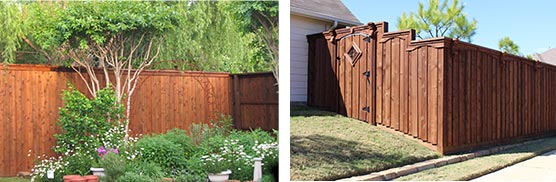
When it comes to fence stains and fence sealers, no two are created equal. This page will show you how staining a fence with Ready Seal® Fence Stain is a better option than fence paints, acrylic fence stains or any of the other numerous fence stains and sealers available today.
Choosing a Fence Stain
So you've spent a few thousand dollars building a nice new cedar fence. Now what? If left unfinished, that beautiful new fence will begin to quickly deteriorate and turn gray. If neglected for a few years, the wood may begin to rot and become very unsightly. The best option is to apply a stain to the wood, which will offer protection against harmful UV-rays. To protect the wood against moisture which can lead to algae, mold and mildew growth, the wood must also be sealed with a waterproofing agent.
The best option is to use a product that incorporates both of these attributes in one application.
Ready Seal® Fence Stains
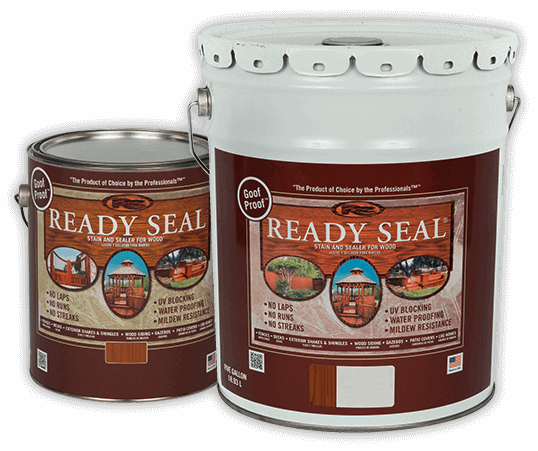
Ready Seal® Fence Stain and Sealer for Wood is a penetrating type, semi-transparent stain and sealer in one. It seals out moisture and has a heavy concentration of trans-oxide pigments that provide maximum UV-protection, yet allow the natural characteristics of the wood to show through. We designed Ready Seal® Fence Stain to circumvent the problems associated with all the various formulations of the different coating types listed below.
NO LAPS, RUNS, OR STREAKS. No Cracking, Chipping, Flaking or Peeling. Enhances natural look and Protects against UV Rays. Clean, Dry and Re-apply. No Sanding. No Stripping.
Problems with Fence Paint or Solid Color Fence Stains
Fence paint, while offering exceptional protection against UV-rays, has many issues that make it a less than desirable choice for staining a fence:
- Fence paint and solid color fence sealers, often called opaque stains, hide all of the natural characteristics of the wood. No grain or knots are visible after application.
- Many fence paints require applying a primer coat prior to applying the top coat.
- Application of fence paints or solid color fence stain requires careful attention to avoid lap marks, or runs, and when spraying, backbrushing is necessary for an even finish.
- Fence paint and solid color fence sealers sit on the surface of the wood, forming a rigid film that cannot flex with the wood. Over time small cracks form and moisture is allowed to penetrate through the coating, via these small cracks, and into the wood, leading to coating failiure, cracking, chipping of paint and also rot, mold and mildew issues.
- Although fence paint may last 5 to 7 years, maintenance can be very time consuming and costly, usually requiring a total stripping or sanding of the fence back to bare wood prior to re-application.
Problems with Clear Fence Sealers
Clear fence sealers are not fence stains, they do not contain pigments and do not change the color of the wood. Clear fence sealers do a great job of sealing out moisture, however, they contain no pigment and allow harmful UV-rays to pass through the clear coating and degrade the surface of the wood. These types of fence sealers include varnishes, lacquers, sealers and various other products that are not pigmented. Even clear sealers that claim to contain clear UV-inhibitors provide little to no protection.
- Many clear fence sealers may be film-forming finishes, prone to the same cracking, flaking and peeling as deck paint.
- Penetrating clear fence sealers are not subject to cracking and peeling, but still offer minimal UV-protection.
- Application of clear fence sealers typically require backbrushing and attention to detail during application, even when being sprayed.
- Because a clear fence sealant contains no UV-protection, the coating will typically last 6 to 24 months before a cleaning and re-application is required.
- Fence Cleaning or re-application of clear products may be very time consuming, sometimes requiring a total stripping or sanding of the fence back to bare wood prior to re-application.
Problems with Transparent Fence Stains and Sealers
Transparent coating products are fence stains and/or sealers that contains a very small amount of pigmentation, but still allows the natural characteristics of the wood, such as grain and knots, to be seen. This addition of pigment adds color to the wood and provides more UV-protection than clear sealers. Although they contain pigments, these coatings still offer only a minimal amount of protection from harmful UV-rays. Transparent fence stains and/or sealers may be either form-filming or penetrating formulations.
- Some transparent fence stains may not include a sealer to block moisture and may need to have a clear fence sealant applied on top of the stain.
- Many transparent fence stains and/or fence sealants may be film-forming finishes, prone to the same cracking, flaking and peeling as deck paint.
- Penetrating transparent fence stains and/or fence sealers are not subject to cracking and peeling and are a better option than acrylic or latex type film-forming varieties.
- Application of transparent fence stains and/or fence sealers typically require backbrushing and attention to detail during application, even when being sprayed, to avoid runs, laps and streaks.
- Transparent fence coatings will typically last 6 to 36 months before a cleaning and re-application is required.
- Maintenance of transparent fence stain products may be very time consuming, sometimes requiring a total stripping or sanding of the fence back to bare wood prior to re-application.
Problems with Semi-transparent Fence Stains and Fence Sealers
Semi-transparent fence stains and/or fence sealers are heavily pigmented to provide exceptional UV-protection. The amount of pigment is not so much that it hides the natural characteristics of the wood. Semi-transparent coatings may come in a pentrating formula or a film-forming type formulation that sits on the surface of the wood.Many of the issues concerning transparent fence stains are shared by semi-transparent coatings.
- Some semi-transparent fence stains may not include a sealer to block moisture and may need to have a clear fence sealant applied on top of the stain.
- Many semi-transparent fence stains and/or fence sealants may be film-forming finishes, prone to the same cracking, flaking and peeling as fence paint.
- Application of semi-transparent fence stains and/or fence sealers varies with the formulation, but typically require backbrushing and attention to detail during application, even when being sprayed, to avoid runs, laps and streaks.
- Semi-Transparent fence coatings will typically last 1 to 7 years before a cleaning and re-application is required.
- Maintenance of semi-transparent fence stain products varies with the formulation, but generally will be very time consuming, sometimes requiring a total stripping or sanding of the fence back to bare wood prior to re-application.
CLICK HERE to See how Ready Seal® avoids the problems faced by other coatings available today.
Categories