Loading...

FAQ

General Questions

What is Ready Seal®?

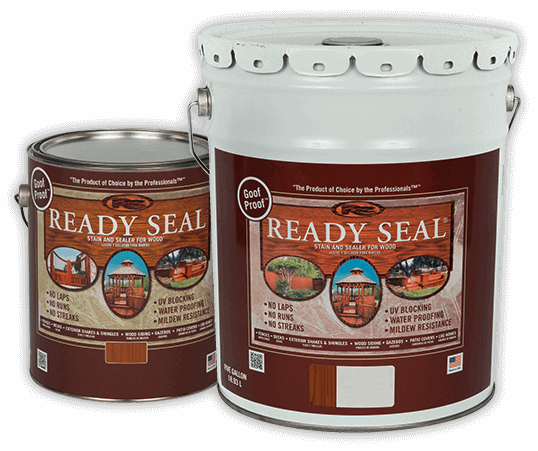
- Ready Seal is a commercial-grade oil-based, semi-transparent sealer and stain for exterior wood. It is a unique blend of ingredients that penetrates deeply into wood to protect and preserve it from the elements.

How long has Ready Seal® been in business?

- Ready Seal has been manufacturing quality products since 1992. We are located in Weatherford, Texas.

Is Ready Seal® VOC compliant?

- Ready Seal is VOC Compliant and contains less than 100 Grams/Liter of Volatile Organic Compound (VOC)
- Dispose of According to Local, State and Federal Laws.

How long does Ready Seal® last?

- Ready Seal’s life expectancy is 1-3 yrs on horizontal surfaces, and 3-5 years on vertical surfaces.
- Horizontal surfaces are subject to higher exposure levels of sunlight, weather and foot traffic, therefore longevity is shorter than vertical surfaces.
- To properly maintain wood, a light cleaning and recoat are recommended every 2 years on horizontal surfaces and every 3 to 4 years on vertical surfaces.

Does Ready Seal offer UV protection? Why not use a clear sealer?

- Clear finishes contain no UV protection; they allow damaging UV rays to pass through to the wood unchecked, degrading the wood’s surface. The wood soon sloughs off that damaged top layer of cells, taking the finish with it.
- All Ready Seal colors contain transoxide pigments. Transoxide pigments have exceptional UV radiation absorption, providing exceptional protection to wood surfaces.

Can I use Ready Seal® on interior wood?

- Ready Seal® is designed for exterior use only.
- If Ready Seal® is to be used for interior use, it is recommended to provide proper ventilation during and after application.
- After application, we recommended wiping the entire surface that Ready Seal® was applied to, with a clean rag dampened with Mineral Spirits to remove oil residue.
- It is recommended that any interior surface sealed with Ready Seal be top coated with a clear varnish or polyurethane film forming coating.
- *This is NEVER recommended for exterior projects. Interior coatings are not subject to outside elements and therefore will not require the maintenance and reapplication of an exterior surface.

How much stain do I need?

Wood Type Sqft/gal
Spruce Fence 150
Cedar Siding (smooth) 150
Cedar Fence 125
Cedar Siding (rough) 125
Pine Fence 150
Pine Siding 170
Treated Pine Fence 150
Cedar Shingles 150
Treated Pine Deck 150
Cedar Deck 150

Smooth lumber vs. rough lumber

- Smooth cut lumber generally stains lighter in color than rough cut boards.
- Rough cut lumber also generally requires more stain per square foot than smooth cut lumber.

Can I mix different colors of Ready Seal?

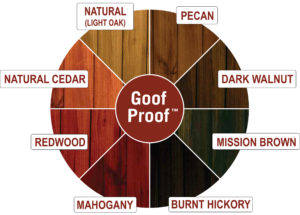
- Ready Seal does not create custom colors or special mixes.
- If desired, Ready Seal colors may be mixed together to form a custom color. All colors and pigments are compatible.
- Because recreating a custom color mix for maintenance purposes may be difficult, it is recommended to record mixing ratios and colors for future reference.
Is Ready Seal safe around pets?
- It is recommended to keep all pets and animals away from any sealed surfaces until they are adequately dried.
- Ready Seal is safe to use in barns and stables. If your animal chews on wood sealed with Ready Seal contact your veterinarian.

What is Ready Seal’s shelf life?

- An unopened can or bucket of Ready Seal has an average shelf life of 1 ½ to 2 years.
- Any opened but unused product should be placed into the smallest container possible to minimize excess air/oxygen contact.
- Store Ready Seal in a cool, dry place. Avoid drastic changes in temperature or direct sunlight for prolonged periods of time.

What is Ready Seal’s compatibility with other stains?

- Ready Seal is a unique mixture, incompatible with most other coatings.
- It is not recommended to mix Ready Seal with other stains or coatings.
- Painting or staining over Ready Seal with other coatings is not recommended and may cause reapplication to be difficult.
- Applying Ready Seal over existing stains or paints is not recommended. Ready Seal needs a clean, bare wood surface for optimal penetration and adhesion.

How do I take the lid off my 5-gallon bucket?

- Ready Seal ships several thousand buckets all over the United States. To protect against damage or loss in shipping, we use a very sturdy lid on our 5-gallon buckets. This lid is not easily removed.
- The best method is to use a bucket lid remover tool, or take a razor blade and cut a notch every 3-4 inches around the lid to create “tabs” that can be pried with the hands or a tool.

Does Ready Seal contain insecticide?

- Ready Seal does not contain any chemical designed to kill or repel any form of insects.


Ready Seal® Tips and Hints

Tips and Hints

- Pour buckets with the spout at the 12 o’clock position to avoid sloshing and spills
- When pouring stain into sprayers of other containers, always pour while standing over grass or a tarp, not over driveways or concrete.
- Use cardboard or spray shields to help control overspray.
- Because oil is lighter than water, wetting surfaces such as driveways, patios or plants prior to application prevents unwanted stains on such items. Ready Seal® floats on top of the water, and will not soak into wetted surfaces. Rinsing areas again after staining washes away the floating oils.
- Never spray Ready Seal® on windy days.
- Brush areas of fences or decks that are close to a house or garage first. Brushing out a few feet allows for prevention of overspray on brick or siding.
- Always keep a gallon of paint thinner or mineral spirits close by to clean any spills immediately.
- When spraying fences, buy a four foot wide roll of construction paper and lay sections of it right up to the base of the fence. The paper will protect the grass next to the fence from overspray and spills.


Preparation Questions

Preparation Process

- Surface must be clean of mildew, dust, dirt, oil and grease.
- Ready Seal recommends applying one part bleach and three parts water.
- All previous stains and sealers must be completely removed.
- Caustic strippers must be neutralized thoroughly.
- Rinse thoroughly with water. Before staining, wood must dry completely for 48 hours or more depending on weather conditions.
- Protect against overspray and cover all plants and vegetation with plastic drop cloth before applying Ready Seal.
- Take special precautions when working around porous stone and concrete surfaces, Ready Seal is a penetrating stain, and will do so on any porous surface.

Power/Pressure washing to clean a fence or deck?

- Pressure washing must be done with special care, so that no damage to the wood surface occurs.
- Pressure washing is best used in combination with a wood cleaning mixture or chemical.
- Use no more than 1500psi if possible
- Start the widest angled tip available and with at least 18 inches of space between your nozzle and the substrate you are power washing, to gauge the effect you will have on the wood. Adjust accordingly.

Should I sand the wood prior to staining?

- Sanding is not required on any surface to which Ready Seal will be applied. If sanding is desired, be sure to adequately clean the surface of all dust prior to staining.
- In some instances, sanding the wood to much may lead to water soluble extractive compounds in the wood itself to leach to the surface causing discolorations.

How do I clean Redwood?

- The California Redwood Association recommends cleaning redwood lumber with 1 cup trisodium phosphate (TSP) 1 cup household bleach mixed with one gallon of water. Apply the mixture and scrub with a stiff bristle brush, and rinse thoroughly.
- Use an oxalic acid brightener after cleaning to remove discolorations caused by extractive bleeding.

How do I fix sprinkler marks on my fence?

- Sprinkler marks are best avoided by correcting the problem before marks or “halos” begin to show. Adjust all sprinkler heads away from fences or any exterior wood project.
- Daily or bi-daily contact from sprinklers causes wood to age prematurely. It’s as though only certain parts of your project are being rained on and weathered more frequently than the remainder of your project.
- Water from sprinklers and hoses also contain higher levels of minerals and chlorines than rain water, sometimes leaving white rings on fences.
- The only solution for fixing sprinkler marks is to scrub thoroughly with bleach, soap and water solution and possible a wood brightener agent. Allow the wood to dry for a minimum of 48 hours.
- When applying stain, spray or apply to the sprinkler marks first and then coat the rest of the project according to the 2 light coats instructions.
- - This means 3 coats on the sprinkler marked areas, and 2 coats on the rest of the project.

Moisture Content

- Ready Seal recommends a minimum of 12% moisture or less in all wood species and projects to be stained.
- Moisture content can be measured using an electronic moisture meter.

How long do I need to wait for my new wood to dry?

- New Cedar
- - 2-4 week dry time depending on temperature, porosity of surface, humidity and geographic location, to adequately absorb applications of Ready Seal.
- New Pine, Spruce or Fir
- - 1-3 week dry time, depending on temperature, porosity of surface, humidity and geographic location, to adequately absorb applications of Ready Seal.
- New Pressure Treated lumber
- - Minimum of 1 month dry time and recommended 2-3 month aging time depending on temperature, porosity of surface, humidity and geographic location, to adequately absorb applications of Ready Seal.

What if I’m replacing boards or I have different types of wood?

- Due to differences in wood grain, age and porosity, color variances will be noticed in new boards vs. old boards.
- Older wood appears darker in color because it absorbs more stain.
- New wood tends to be lighter in color.
- Different species of wood also accept stain differently; always test in an inconspicuous area to test for desired color.


Maintenance Questions

Maintenance Questions

- Ready Seal Maintenance and Reapplication
- To properly maintain wood, a light cleaning and recoat are recommended every 2 years on horizontal surfaces and every 3 to 4 years on vertical surfaces.
- Some hardwoods, such as Ipe, Garapa or Tiger Wood may need reapplication yearly. These extremely dense hardwoods do not readily soak up sufficient amounts of stain.

What is a light cleaning?

- The surface of the wood must be clean of mildew, dust, dirt, oil and grease.
- Ready Seal recommends applying one part bleach and one part water to the wood to be cleaned. If needed, agitate with a stiff bristle brush. Rinse thoroughly with water two times and allow 48-72 hours of drying time before reapplying.

Why does Ready Seal stop beading water?

- Ready Seal will bead water initially, but is designed to disperse water over a larger area for quicker drying. The water is not penetrating the wood.

Do I need to remove old Ready Seal applications when reapplying?

- No, Ready Seal may be applied over existing applications of Ready Seal with no complications.

There appears to be mold is growing on top of Ready Seal?

- Ready Seal contains mold, mildew and algae inhibitors; however certain strands may be more resilient to these inhibitors.
- The surface may not have been cleaned thoroughly prior to application.
- Very high moisture content may exist
- - Try to redirect any rain run-off or pools of water that may exist in the problem area.
- Inadequate air flow may also be a problem.
- Clean the surface heavily with bleach and water and allow a thorough dry time, and recoat.
- If issue persists, contact Ready Seal Incorporated at 1-888-STAIN-4U


Accidents and Spills

How do I remove overspray from smooth surfaces?

- While Ready Seal is still wet, soak or wipe with mineral spirits or paint thinner.
- These following products are readily available at your local home store and have proven effective in removing Ready Seal overspray from most smooth surfaces.
- - Simple Green, Purple Power, Scrubbing Bubbles, Greased Lightning,

How do I clean Ready Seal off the metal poles on my fence?

- Metal Poles are best cleaned with a rag and mineral spirits before the stain has had time to dry. We suggest cleaning poles within 45 minutes of being sprayed with Ready Seal.

How do I remove overspray on concrete, brick or stone?

- Try to remove the stain as soon as the incident occurs by soaking with mineral spirits.
- If the stain was allowed to dry, apply one of the following products found readily available at your local home or automotive store.
- - Simple Green, Purple Power, Scrubbing Bubbles, Greased Lightning,
- Apply the product to the surface; agitate heavily with a stiff bristle brush. Allow 5 minutes soaking time, and then pour a small amount of Oil Dry or other absorbent material over the stain. Allow the liquid to absorb for several minutes and sweep away the granules. Repeat as necessary.

How do I remove overspray on a vehicle?

- If caught while the stain is wet, soap and water will remove most of the overspray.
- If the overspray has had time to dry and, try using Purple Power Degreaser, a product found at most automotive stores.
- If the overspray still cannot be removed, choose an appropriate rubbing compound or wax and apply per manufacturer’s instructions.

How do I remove Ready Seal from a pool, lake or pond?

- Always take extra precautions to guard the water from overspray, drips or spills.
- Because the oil in Ready seal is lighter than water, it will float on the surface. Use a pool/spa or pond cleaning device call “Scum Balls” or a product that is similar. These products float around on the water’s surface and absorb oils.

Will Ready Seal kill my grass, plants or trees?

- Protect vegetation against overspray and cover all plants before applying Ready Seal.
- Light overspray may not kill grass or plants, but yellowing/browning may occur. Heavy overspray and spills can kill vegetation.